
Before You Order: Measure Your Roof Ribs
All shipping containers have roof ribs, but they come in TWO different sizes (3.5" or 6.5").
You must measure your specific container before ordering to ensure proper fit.


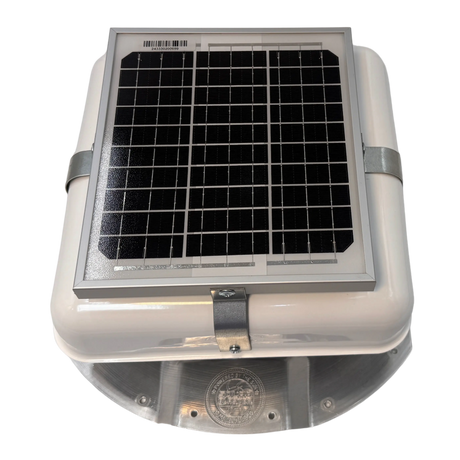
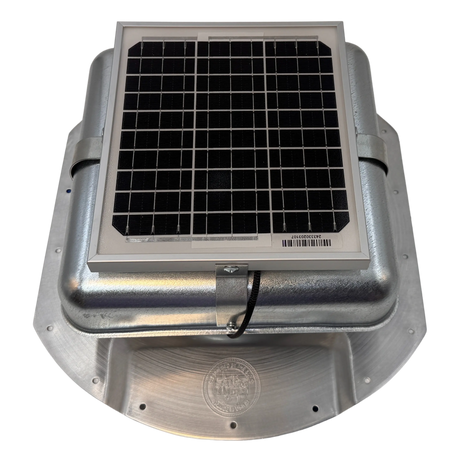

Conex Solar Mega RoofBlaster for Shipping Containers
Regular price From $239.99Unit price /Unavailable

Conex Solar Mega SideBlaster Adjustable for Shipping Containers
Regular price From $309.99Unit price /Unavailable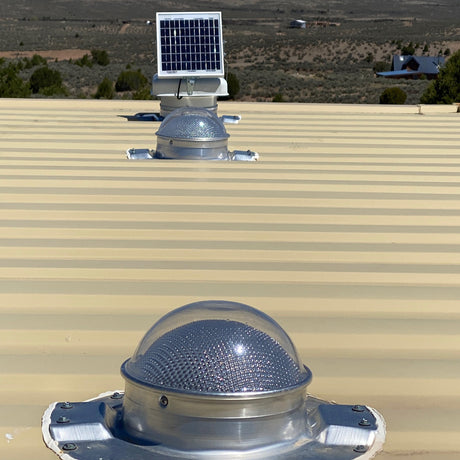


Conex Solar Mega RoofBlaster Adjustable for Shipping Containers
Regular price From $274.99Unit price /Unavailable

Conex Solar LightBlaster (Tubular Skylight) for Shipping Containers
Regular price From $174.99Unit price /Unavailable
Conex Solar Side LightBlaster (Tubular Skylight) for Shipping Containers
Regular price $184.99Unit price /Unavailable


Conex Solar RoofBlaster for Shipping Containers
Regular price From $194.99Unit price /Unavailable
SealBlaster Sealant / Caulking (1 tube)
Regular price $15.95Unit price /Unavailable Regular price $20.00Unit price /Unavailable

Milwaukee 2.5" Hole Saw with Arbor
Regular price $29.99Unit price /Unavailable
Milwaukee 6" Magnetic Bit Holder
Regular price $12.99Unit price /Unavailable
SealBlaster Sealant / Caulking (Box of 12)
Regular price $120.00Unit price /Unavailable


How Shipping Container Ventilation Works
How does the airflow work?
How does the airflow work?
Cooler air comes in through intake vents low on the walls, and hot, moist air leaves through vents on the roof or upper side wall. Several smaller vents spread evenly move air through the whole container instead of leaving hot spots.
Benefits of a Properly Vented Shipping Container
Balance is Key
Balance is Key
A good shipping container ventilation design will include a balanced passive ventilation system. What that means is for every inch of air exhausted out of the shipping container, there needs to be a balanced amount of air coming in through lower intake vents. You should never install only exhaust or only intake vents on your shipping container. They must be balanced in order to effectively achieve air movement.
Uniform Air Movement is Crucial
Uniform Air Movement is Crucial
Having a balanced passive attic ventilation system also means that there is uniform bottom to top air movement across the ENTIRE length of the shipping container.
Air movement is crucial to maintaining a healthy environment. Proper passive ventilation allows the container to breathe and has the following benefits:
- Expels heat.
- Expels moisture.
- Reduces cooling costs.
- Reduces any wood from rotting inside.
- Reduces risk of mold and mildew growth.
- Improves interior air quality.
- Works all year around.
Benefits of Adding Solar-Powered Vents by Solar Blaster
Boost Your Passive Ventilation Using the Sun
Boost Your Passive Ventilation Using the Sun
Once you understand about the benefits of a balanced passive vent system, boosting the effectiveness of that venting system is the advantage that Solar Blaster brings to the table. Multiple solar-powered vent fans will more effectively remove the hot, moist air out of your container and they aren't reliant on just convection and wind to make it happen. And yes, they are passive vents anytime the sun isn't shining. We love the irony that we are utilizing the source of the heat problem, the sun, to also be the solution for removing the hot, moist air in shipping containers. With multiple smaller solar-powered vents, you now have these benefits:
- Expels heat faster.
- Expels moisture faster.
- Reduces cooling costs more.
- Reduces wood rot more effectively.
- Reduces risk of mold and mildew growth more effectively.
Additional Benefits of Solar Blaster's Vents
Additional Benefits of Solar Blaster's Vents
- Easy to install.
- Less expensive than larger solar-powered fans. Bigger is NOT better (see that section below).
- Uses the source of heat to be the solution at no additional cost.
- Multiple fans don't leave hot spots.
- Does not require thermostat control.
- Works even on non-windy days.
- Installs from the top of the container.
- Works even on slightly cloudy days as the fan will start at a slower speed.
- Activates passive vents to make them more efficient.
- Multiple fans promote uniform air movement across the entire Conex container.
What about Wind Turbine Vents?
What about Wind Turbine Vents?
Wind turbine vents require wind to operate so on still, hot and humid days, they do not operate. In addition, to be effective, you would need to place those ugly whirly bird vents across your entire shipping container's roof.
Do you really want multiple of these less-than-appealing vents up on your container's roof that only operate in certain weather conditions? Wind turbine ventilation is not your best choice for venting your Conex box.
As we've said already, the sun is the source of the problem (not the wind), so allowing the sun to also be the solution is ideal. So regardless if the wind is blowing, when the sun is out, your vents are supercharged to exhaust that hot air. It's the best solution around.
Why Multiple, Smaller Solar Fans are the Key
Why Multiple, Smaller Solar Fans are the Key
Multiple, smaller solar fans that also act as passive vents are a much better and effective system. Passive vents should be spaced evenly across the entire length of one's container and by adding a SolarBlaster vent solution to each vent, your vents will be much more effective in exhausting the hot, moist air.
Also smaller solar fans require less power to start operating so our fans will work even on slightly cloudy days. They also don't require an on/off switch or thermostat to control them.
Remember, you want your passive vents to be working all the time day and night. With SolarBlaster's products, you can now activate your passive vents so the sun can start removing its own hot air during the day!
Please visit our Proper Ventilation page for more information and to see a computer-generated simulation that illustrates why bigger is not better.
Storage Containers, Conex Boxes and Other Names
What else are shipping containers called?
What else are shipping containers called?
Shipping containers go by many names — storage container, sea container, ocean container, freight container, cargo container, intermodal container, ISO container, sea can, c-can, moving container, dry container, and insulated container — but they all share the same ventilation challenge: trapped heat and moisture.
Frequently Asked Questions
Do shipping containers need ventilation?
Do shipping containers need ventilation?
If you store anything that can rust, rot or grow mold, yes. A sealed steel container heats up by day and cools at night, and the moisture inside condenses on the walls and roof.
Will a roof vent leak or weaken my container?
Will a roof vent leak or weaken my container?
Our Conex roof vents use form-fitting flashing made for Conex roofs, and with the included hardware the vent becomes part of the container’s structure. Each roof vent affects only one roof rib. Seal it with SealBlaster sealant.
Do solar vents work when the sun is down?
Do solar vents work when the sun is down?
The fan runs on sunlight, so it works hardest when the container is hottest. When the sun is down, the vent still works as a passive vent, letting hot air rise and escape.
How do I measure my roof ribs?
How do I measure my roof ribs?
Container roof ribs come in two sizes, 3.5 in. and 6.5 in. The 3.5 in. size is much more common, but measure your container before you order. Our short video shows how.
Do I need intake vents?
Do I need intake vents?
Yes. Air has to come in low for hot air to leave up top. Use four 2.5" intake vents for each exhaust vent. For every 2 Conex solar products in your order, with at least one being a vent, we include a free 4-pack of intake vents.
From the Solar Insights Blog
Why container ventilation matters, and how to get it right.

Vent placement, rib measurement, intake balance, and the CFM math for 20- and 40-foot containers — the detailed companion article for anyone ready to actually solve the heat and moisture problem.
Read the article →
Open a shipping container on a cool morning and you may find water dripping from the ceiling, even though it hasn't rained in days. The same thing happens in metal...
Read the article →
Some container vents promise 2,000 CFM or more from a small fan and a modest solar panel. Almost every fan rating you'll see is a free-air number measured on a...
Read the article →For Container Dealers and Resellers
-

Photos Sales Flyer
Laminate and keep available for customers to view at the front desk to show off the upgrades they could add to their container.
-

Conex Product Brochure
This is a full color brochure that explains the benefits of the Solar Blaster conex line of ventilation and tubular skylight upgrades for their container.


Video: Solar Vents and Skylights in Action
It's about time shipping containers had proper ventilation and let in natural light. Make your container a better work environment today.


Military Use of Shipping Containers
-
Solar RoofBlaster vents and LightBlaster tubular skylights have been installed on many military containers, sheds and other temporary military buildings.
These temporary work and storage stations don't have to have unbearable working conditions inside of them.
-
Our Solar RoofBlaster vents for Conex Shipping Containers bring in fresh, cooler air and expel the hot air allowing air to circulate throughout the container anytime the sun is shining.
The fresh air will also help remove odors, gas fumes, etc from smelling up the container. Proper ventilation helps mediate moisture buildup through uniform air movement.
-
With our LightBlaster tubular skylights, you can light up the container with natural light at no cost any time the sun is out.
Take a proactive approach to improving the military containers on your base. Trust us, you won't regret it. No one should have to work inside a sauna. Let us help you convert your containers to a workable space.